
‘No excuses’ – workplaces have a duty to prevent sexual harassment
A live action drama brought to life the reality of workplace harassment, and what you can do about it.
29 April 2026
Yolanda and Kristen are sitting together. Yolanda has experienced an uncomfortable situation in her job as a receptionist – a security guard made some unwarranted comments and displayed unprofessional behaviour that made her feel awkward, and because it’s happened more than once already she has become uncomfortable and unsure about coming into work.
It takes some time, but Yolanda eventually works up the courage to talk to her manager, who she rarely sees, about the situation and although it’s embarrassing, she’s sure her manager will support her and tell her what she can do about it.
Instead, Kristen says the security guard was probably giving her a ‘compliment’, and that if placed in the same situation, she would be happy to receive such attention. Yolanda is disappointed to have her concerns dismissed, and even made to feel responsible in some ways, and not knowing who else to talk to, she feels isolated and vulnerable and it reinforces her reluctance to come to work.
The law defines sexual harassment as any unwanted conduct or behaviour of a sexual nature that violates a workers dignity or creates an intimidating, hostile, degrading, humiliating or offensive environment for that worker. And this scenario was a textbook case.
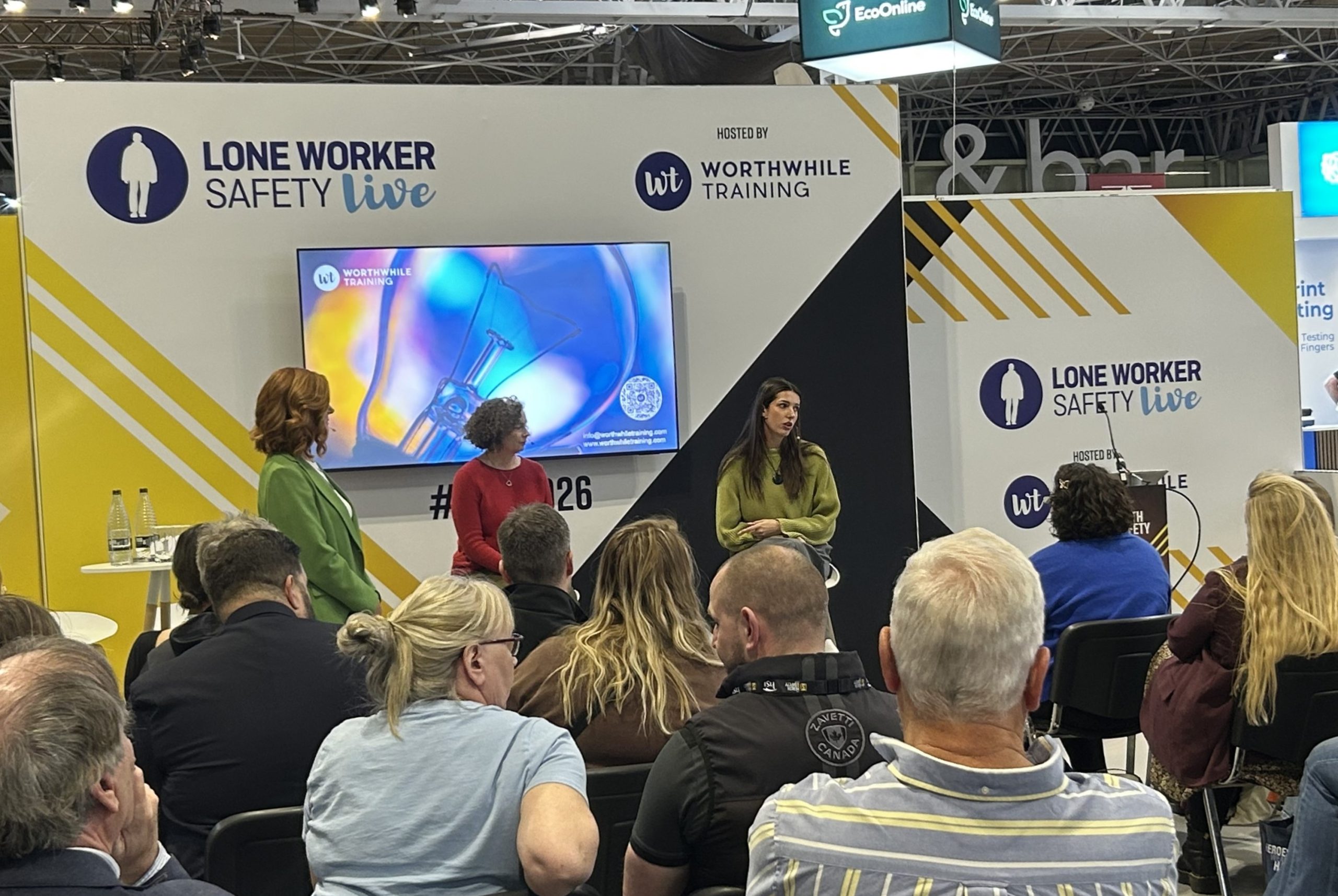
But this wasn’t real life, this was a staged performance in front of a live audience at the Lone Worker Live Theatre at HSE 2026. It was an example of a specialised training program by Worthwhile Training; however, the scenario was based on a true experience of workplace harassment.
In the production, each character’s story was incredibly detailed – Yolanda did everything she could to avoid the unwanted attention, and finally resorted to taking time off work because she couldn’t bear the repeated harassment.
Kristen had had no training in her role and no real guidance herself, but had been left to manage things alone and wanted to give her superiors the impression that she knew what she was doing. But in this situation, her own bias and opinions clouded her judgement, which combined with a lack of knowledge or process to follow meant she tried to minimise it.
After the performance the audience was invited to dissect and interrogate the situation, to comment on the decisions and their own experiences in what was a novel approach to workplace training and discussion of sensitive and challenging situations. One audience member revealed she had faced a similar situation to Yolanda, and asked the character at what point did she feel the behaviour became enough to speak out on it. ‘Yolanda’ replied that getting physically touched was her trigger, although looking back she thought she felt she could have said something sooner. Another member of the audience berated the manager, saying it was unacceptable that a manager could lack empathy in such a way.
The session had touched a nerve with the audience, which was evidently immersed in the realism of the live format to the point where both Yolanda and Kristen were showered with questions and advice on why events happened the way they did, and received comments on how it was plain wrong.
Sexual harassment laws are a common sticking point for many companies and although they are specific, according to Worthwhile Training director, Nicole Vazquez, one of the biggest challenges is identifying what actually crosses the line.
“One thing I want to make clear is that neither I nor the law are interested in your intent,” she told the audience firmly. “If it makes makes me feel violated, if it creates that environment, then it is sexual harassment under the legislation.”
For Vazquez, this means getting rid of excuses like “it was just banter”, “I didn’t mean for them to hear it”, or even “they didn’t say anything, how was I supposed to know?”. “I don’t have to tell you,” she asserted, “in today’s society you should know what’s acceptable and what’s not.”
Amendments made to the legislation governing the protection of workers from sexual harassment was updated in 2023 ensured that not only did it become a mandatory duty to prevent sexual harrassment from workers and third parties (such as contractors and clients), but the Equality and Human Rights Commission (EHCR) can now take enforcement action where duty has not been met – even if an incident hasn’t occured.
“Just because it’s difficult doesn’t mean you don’t have to do it,” said Vasquez. She closed the session by offering the audience some guidance. Her reasonable steps employers and employees can take to prevent sexual harassment at work include:
- Create a clear, evaluated policy and ensure people know about it and can easily find it,
- Engage with staff on this issue,
- Assess and reduce the risk in your workplace – a concept that would be familiar to safety professionals,
- Have a reporting system that is accessible and has the option to make an anonymous report, Provide training on expectations, how to spot it, what to do, how to support individuals affected, and how to manage sexual harassment incidents,
- Have an action plan of both formal and informal procedures,
- Manage third party harassment using all of the aforementioned steps, and
- Monitor and evaluate your actions.
“I think if the business that both Yolanda and Kristen work for had had these steps in place, we wouldn’t have heard that story,” said Vazquez. “It would have been nipped in the bud quite early on and the right kind of support would have come into play.”


